Same and Different Worksheets
Updated October 2026 · 8 free printables
Same and different worksheets that train careful looking: circle the one that is different, find the two that match, compare pairs, spot the small difference, odd one out by category (not a fruit, not an animal), which one does not belong with a hidden rule, same color, shape and size sorting, and a spot-the-difference park scene.
Pre-K pages use clear differences like a pear among oranges. Kindergarten pages hide smaller changes: a fish turned the other way, a smaller heart, a frowning face or a door that changed color. Answers are on page 2.
All 8 Same and Different Worksheets, One by One
Here is a closer look at every page in this collection, with who it's best for and a coloring idea for each one.
-
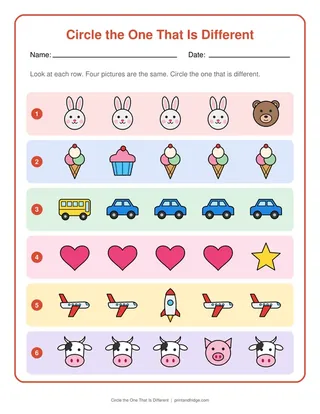
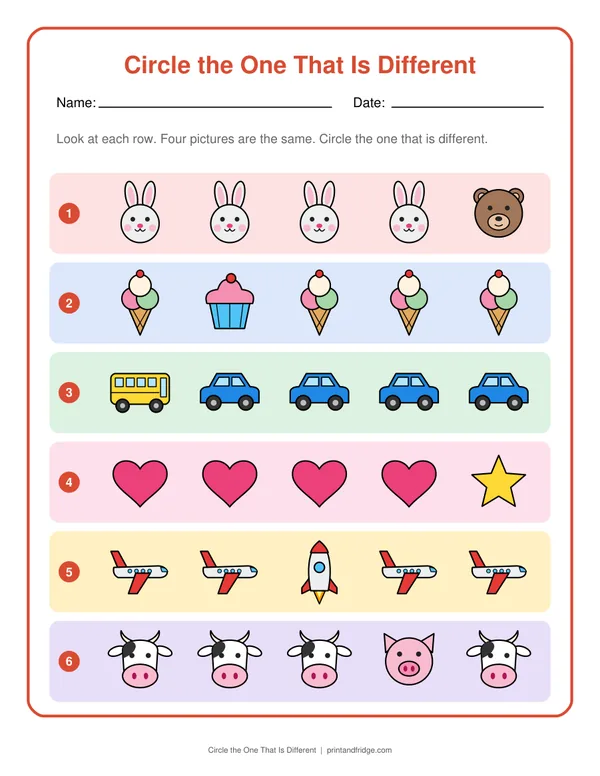
1. Circle the One That Is Different
Six rows of five pictures for preschoolers: four are exactly the same and one is a different thing, like a strawberry among apples or a whale among fish. Kids find and circle the one that does not match. The answer key is on page 2. It is made for pre-K and preschool, roughly ages 4 to 5, with big pictures and one number per page.
-
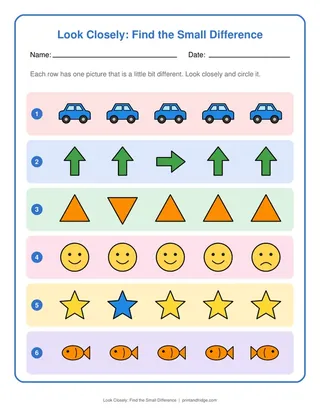
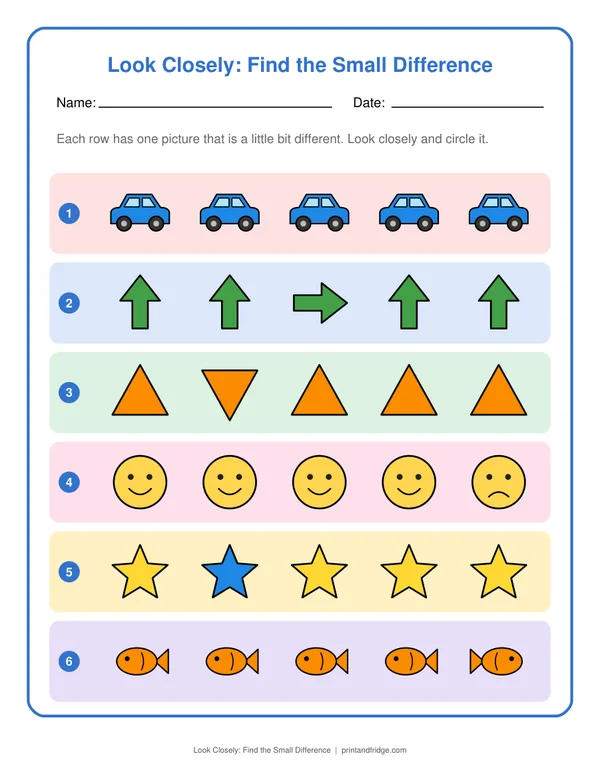
2. Look Closely: Find the Small Difference
A harder same-and-different page: the odd one out is turned the other way, upside down, smaller, a different color or has a different face. Six rows train careful looking for kindergarten. The answer key is on page 2. It suits ages 4 to 6, and little ones can count the pictures with a finger.
-
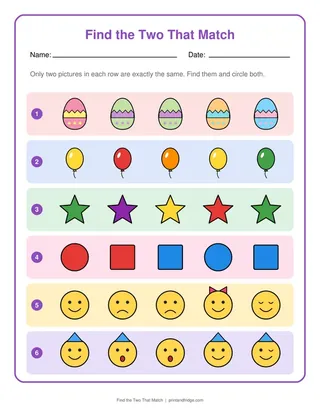
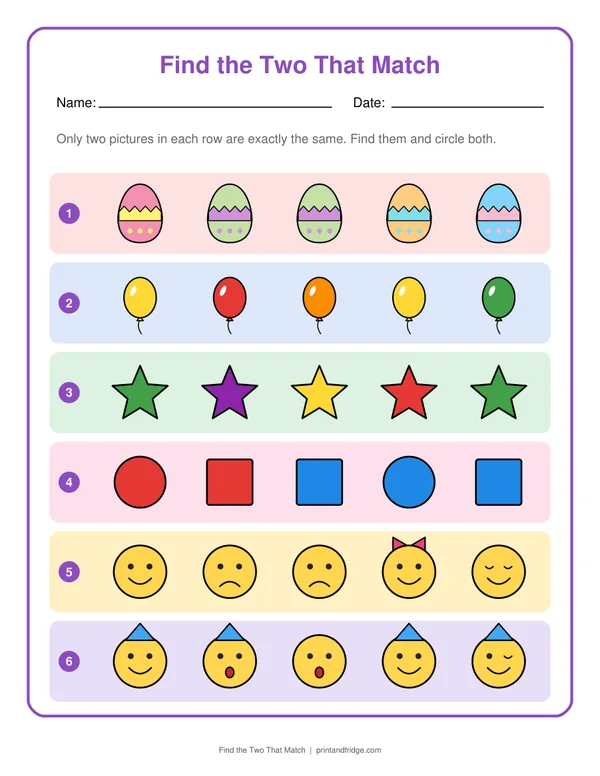
3. Find the Two That Match
Six rows where two pictures are twins: Easter eggs, balloons, colored stars, shapes that differ in color or shape, and happy faces with small changes. Kids compare every detail to find the matching pair. The answer key is on page 2. Big pictures and only a few tasks per page make it a gentle start for kindergartners.
-
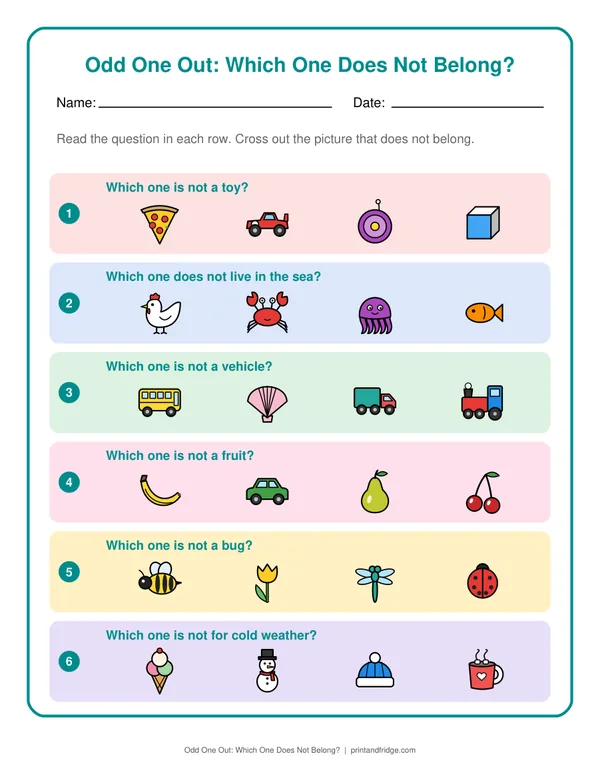
4. Odd One Out: Which One Does Not Belong?
Odd one out by category: which one is not a fruit, not an animal, not a vehicle, not a bug or does not live in the sea? Each row has three pictures that belong together and one that does not. The answer key is on page 2. It is made for pre-K and preschool, roughly ages 4 to 5, with big pictures and one number per page.
-
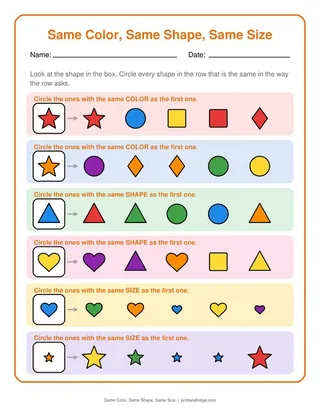
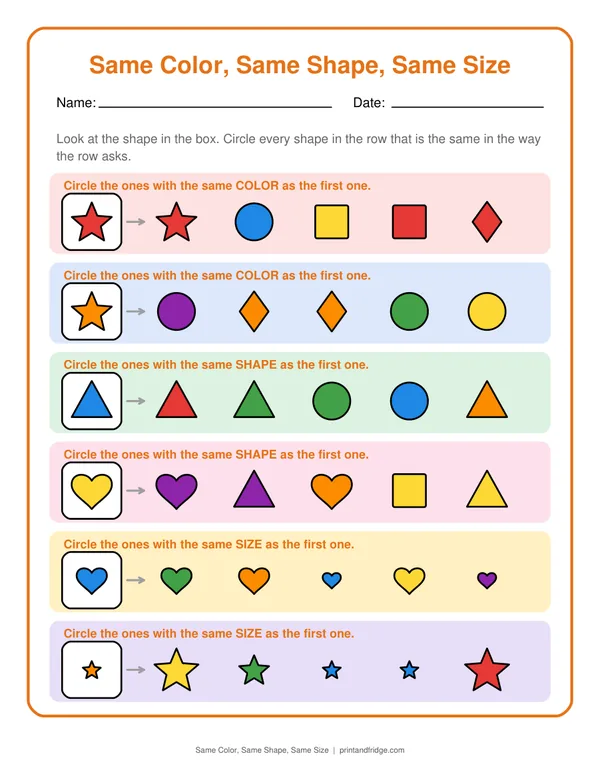
5. Same Color, Same Shape, Same Size
Sorting by one attribute at a time: two rows ask for the same color, two for the same shape and two for the same size. Tricky distractors (same color but a different shape) make kids check the one thing that matters. The answer key is on page 2. Big pictures and only a few tasks per page make it a gentle start for kindergartners.
-
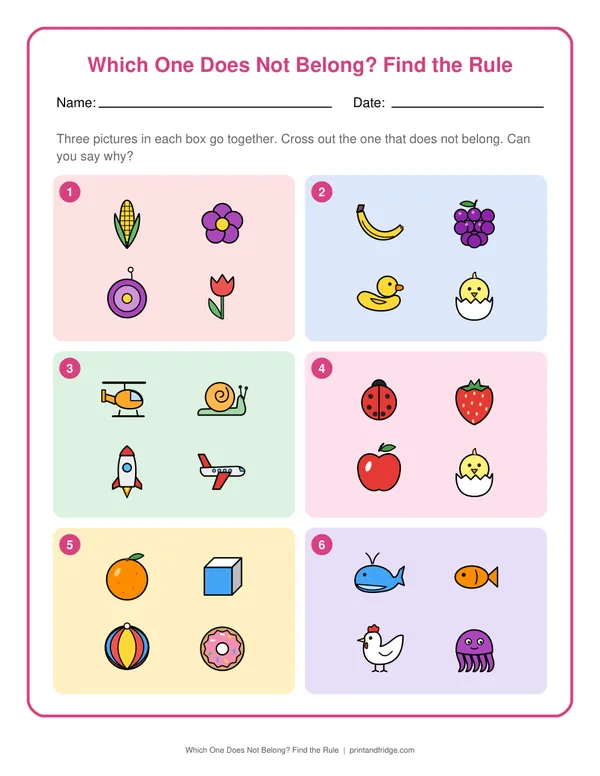
6. Which One Does Not Belong? Find the Rule
Six picture boxes with a hidden rule: things that fly, things with wheels, yellow things, round things, things that live in water and more. Kids cross out the odd one and explain the rule; the key lists every rule. The answer key is on page 2. It suits ages 4 to 6, and little ones can count the pictures with a finger.
-
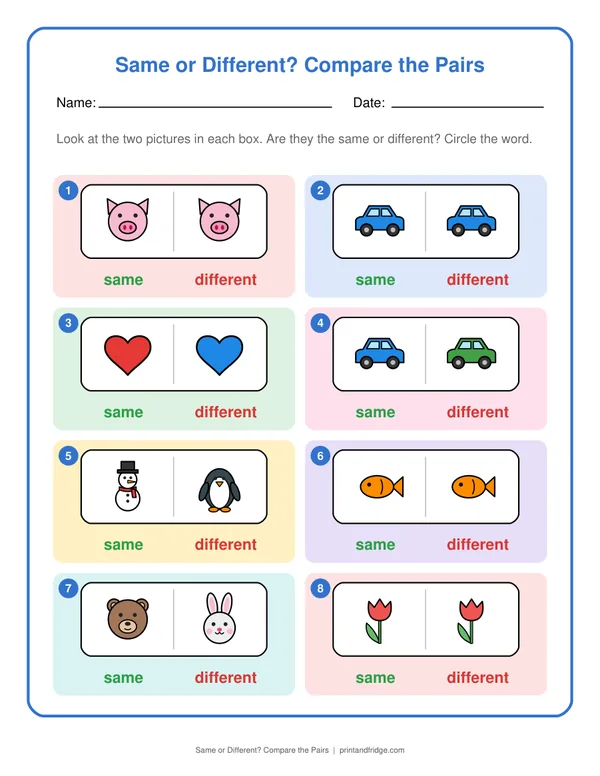
7. Same or Different? Compare the Pairs
Eight picture pairs for the youngest learners: some are twins and some differ in color, shape, kind or the way they face. Kids compare the two pictures and circle same or different. The answer key is on page 2. It is made for pre-K and preschool, roughly ages 4 to 5, with big pictures and one number per page.
-
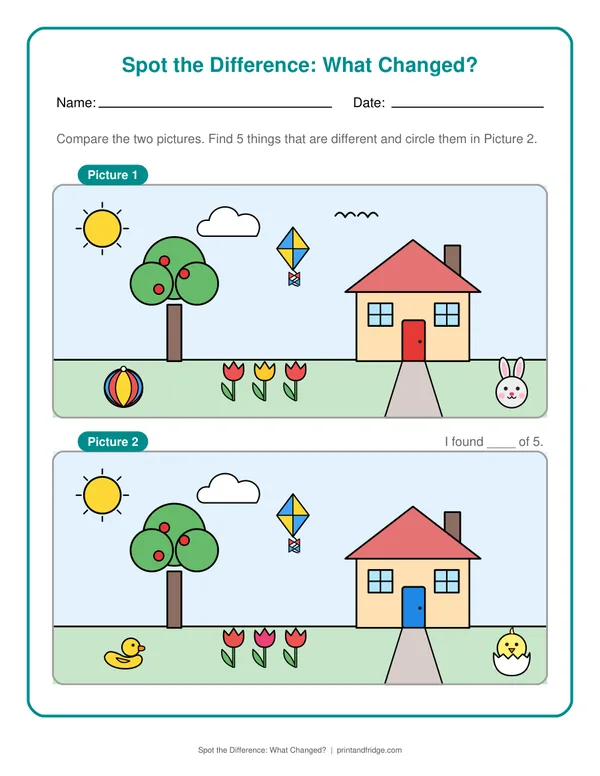
8. Spot the Difference: What Changed?
A sunny park scene drawn twice, with a house, an apple tree, tulips, a kite and a bunny. Five things changed in the second picture; kids compare the two scenes, circle the changes and count how many they found. The answer key is on page 2. Big pictures and only a few tasks per page make it a gentle start for kindergartners.
Tips for coloring Same and Different Worksheets
- Start with the pre-K pages where the different picture is a different thing, then move to the small differences.
- Ask why after every answer; naming the difference (color, size, way it faces) builds vocabulary.
- Cover all rows but one with a sheet of paper so younger kids focus on a single row.
Fun facts about Same and Different Worksheets
- Telling apart look-alike shapes is closely linked to learning letters like b, d, p and q.
- Sorting by one attribute at a time (only color, only shape) comes before sorting by two attributes.
- Spot-the-difference puzzles exercise visual memory: kids hold one picture in mind while scanning the other.
Fun ways to use your printables
- Play a real-life odd one out: put three spoons and a fork on the table and ask which one does not belong.
- Sort toys or laundry by color, then by size, then by kind.
- Let your child make an odd one out row for you by drawing three things that go together and one that does not.
How to print
Click Download PDF on any page and print it at 100% on US Letter or A4 paper. Use regular printer paper for crayons and pencils, or cardstock for markers and paint. Every page here is free for home, classroom and party use, so feel free to print as many copies as you need.
Frequently asked questions
Why are same and different skills important?
Noticing what is alike and what is different is the base for sorting, patterns, reading (b and d look alike!) and math. It is called visual discrimination and is part of every kindergarten readiness list.
What is an odd one out activity?
Kids look at a group of pictures and find the one that does not belong, then say why: it is not a fruit, it cannot fly, it is not round. Explaining the rule is the real learning.
My child circles the wrong one. How can I help?
Ask them to point at each picture and say what it is and what color it is. Saying the details out loud usually makes the different one jump out.
How many differences are in the spot-the-difference page?
Five. A little score line at the top lets kids write how many they found, and the answer key circles all five.