Beginning Sounds Worksheets
Updated November 2026 · 10 free printables
Beginning sounds worksheets for preschool and kindergarten: color the pictures that start with B, color by sound with M and S, circle or write the first letter, match pictures to the letters A to J, find two pictures that start the same and sort the look-alike letters b, d and p. A colorful A to Z beginning sounds chart is included.
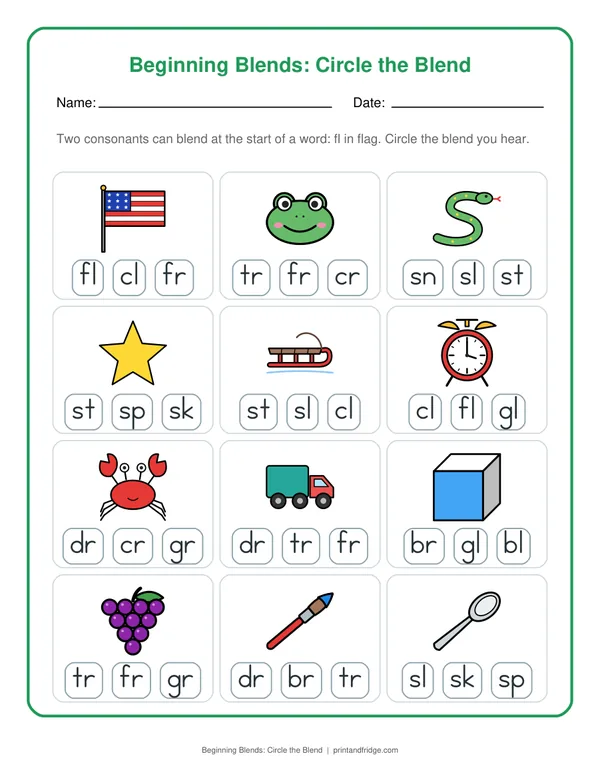
For first graders there are two beginning blends pages, where two consonants start the word together: fl in flag, fr in frog, sn in snake and st in star. Answer keys are on page 2.
All 10 Beginning Sounds Worksheets, One by One
Here is a closer look at every page in this collection: what it practices, which grade it fits and a tip for each one.
-
1. Beginning Sound B: Color the Pictures
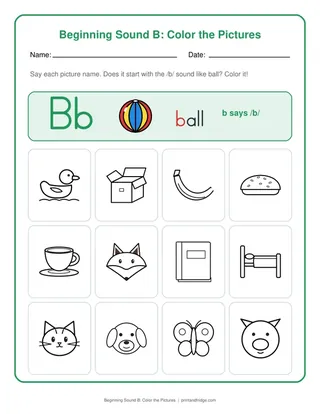
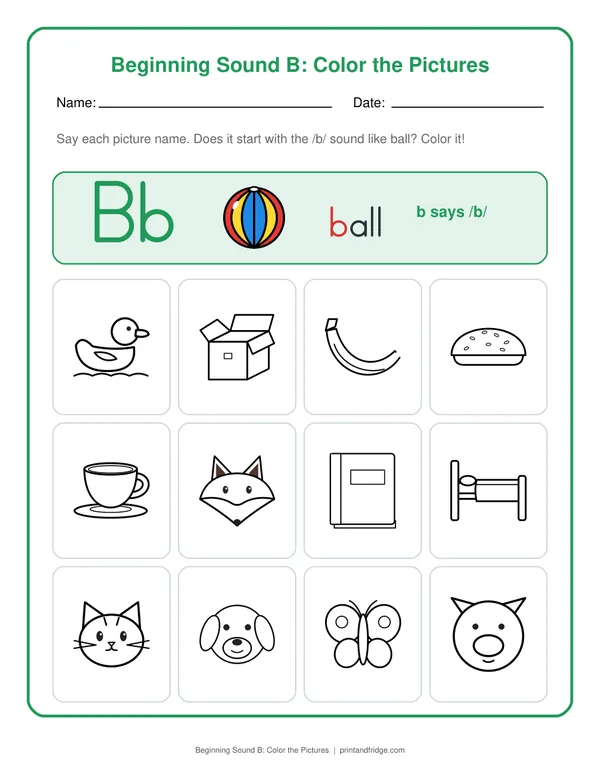
A beginning sounds worksheet for the letter B: a big Bb with a ball, then twelve pictures to name. Kids color the six that start with the /b/ sound and leave the others white. Answer key included. It is made for pre-K, roughly ages 4 to 5: big letters, a picture clue and lots of coloring.
-
2. Beginning Sounds M and S: Color by Sound
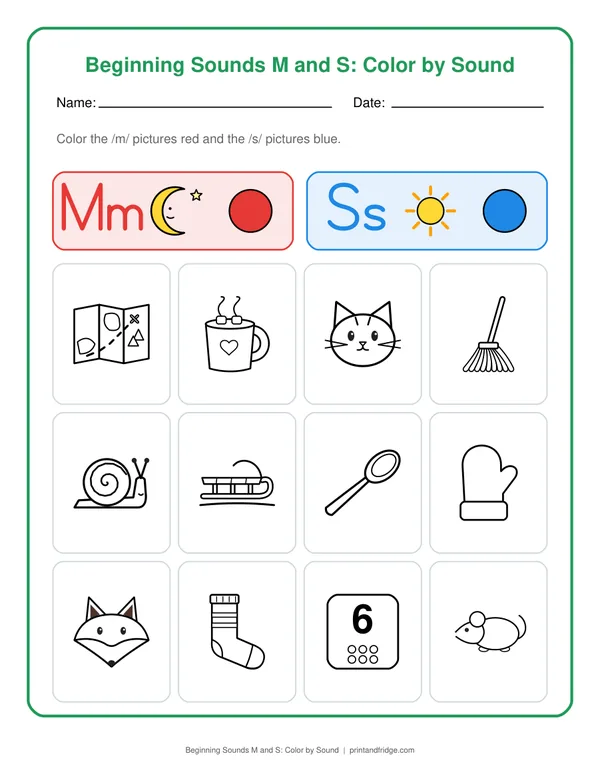
Twelve pictures to sort by their first sound: color the m pictures (mop, mouse, mug, map, mitten) red and the s pictures (sock, six, snail, sled, spoon) blue. Two pictures fit neither letter. The key shades each card. It is made for pre-K, roughly ages 4 to 5: big letters, a picture clue and lots of coloring.
-
3. Beginning Sounds Chart A to Z
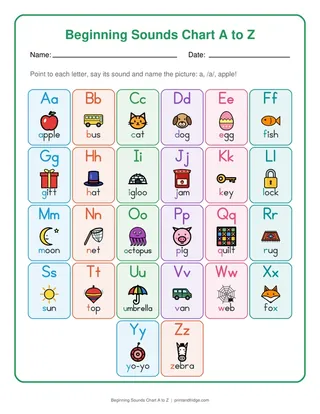
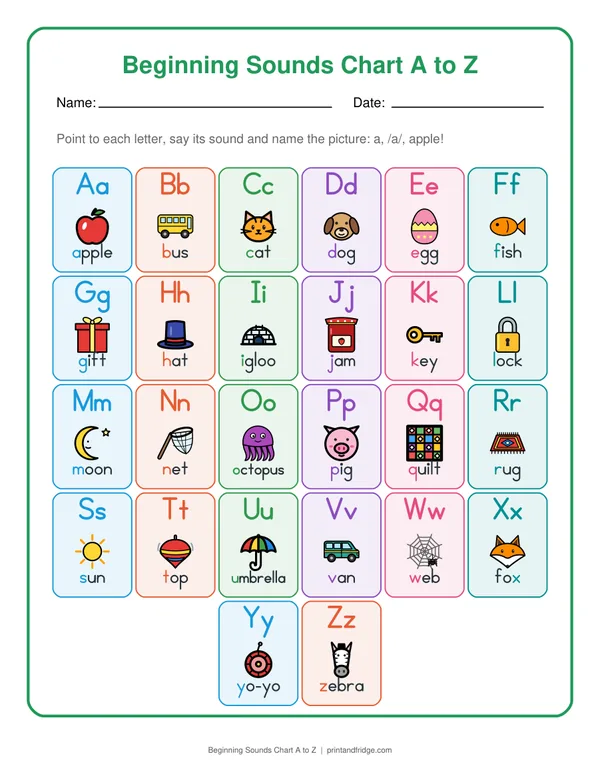
A colorful A to Z beginning sounds chart: every letter in uppercase and lowercase with a picture and its word, from apple, bus and cat to yo-yo and zebra (fox shows x at the end). Hang it by the desk or use it as an alphabet mat. It is made for pre-K, roughly ages 4 to 5: big letters, a picture clue and lots of coloring.
-
4. Circle the Beginning Sound
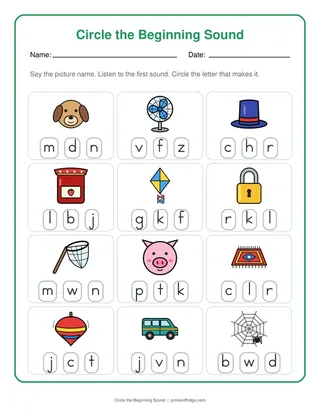
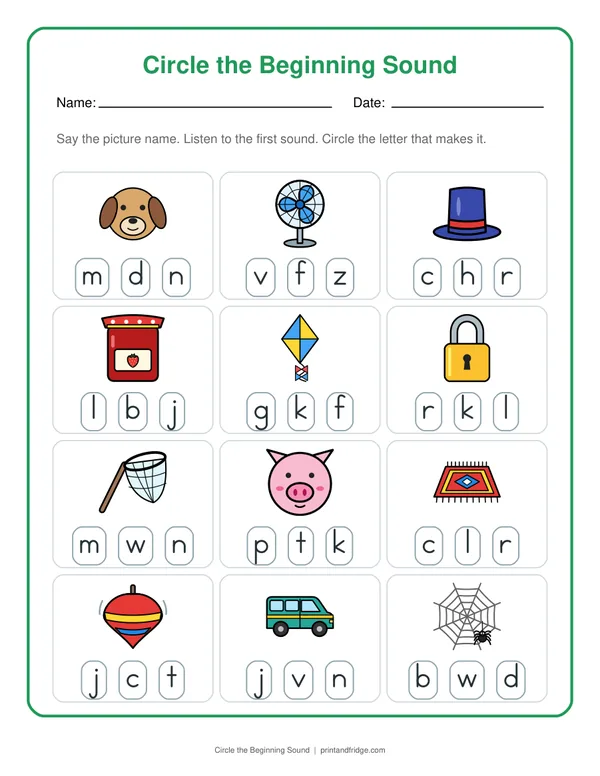
12 pictures (dog, fan, hat, jam, kite, lock, net, pig and more) for beginning sounds practice. Kids say each name, listen to the first sound and circle the matching letter from three choices. Answer key included. It suits kindergarten, about ages 5 to 6, with large print and short, decodable words.
-
5. Write the Beginning Sound
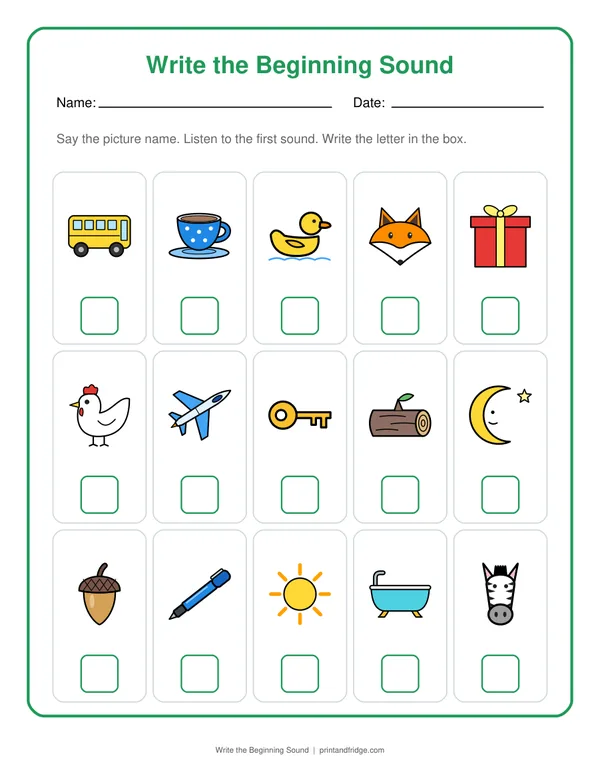
15 pictures (bus, cup, duck, fox, gift, hen, jet, key and more) for beginning sounds practice. Kids say each name, listen to the first sound and write that letter in the box. Answer key included. Kindergartners can point under each word with a finger as they read it out loud.
-
6. Match Pictures to Beginning Letters A to J
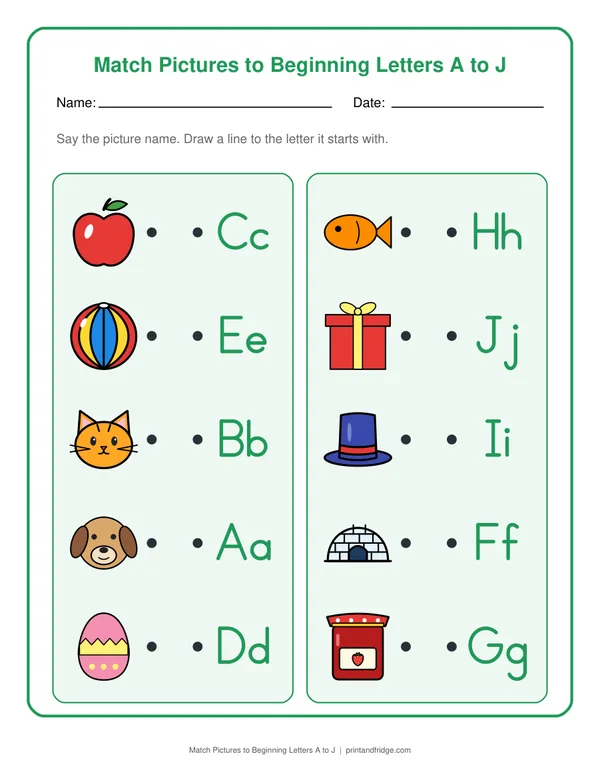
Ten pictures from apple to jam with the letters A to J in mixed order. Kids say each picture name, hear the first sound and draw a line to the uppercase and lowercase letter. The key shows every line. It suits kindergarten, about ages 5 to 6, with large print and short, decodable words.
-
7. Same Beginning Sound: Circle Two Pictures
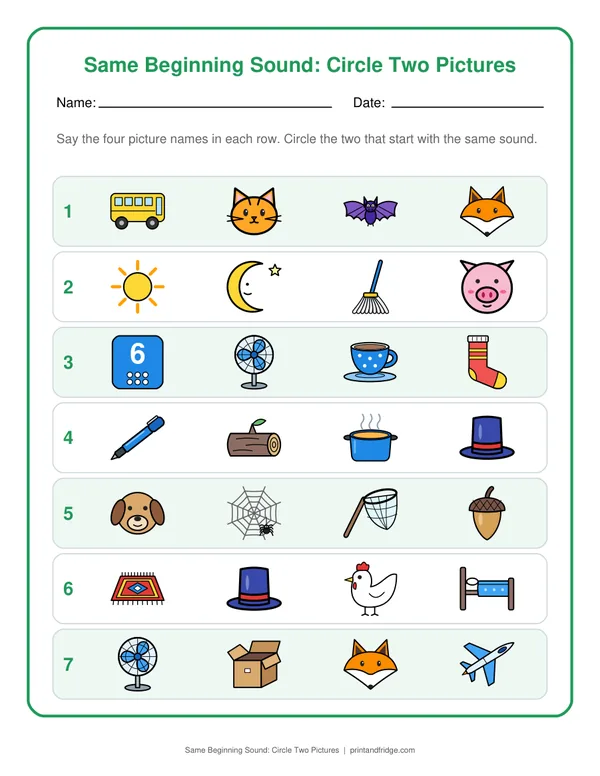
Seven rows of four pictures. In each row two pictures start with the same sound (bat and bus, moon and mop, sock and six and so on); kids say all four names and circle the matching pair. It suits kindergarten, about ages 5 to 6, with large print and short, decodable words.
-
8. B, D or P? Beginning Sounds Worksheet
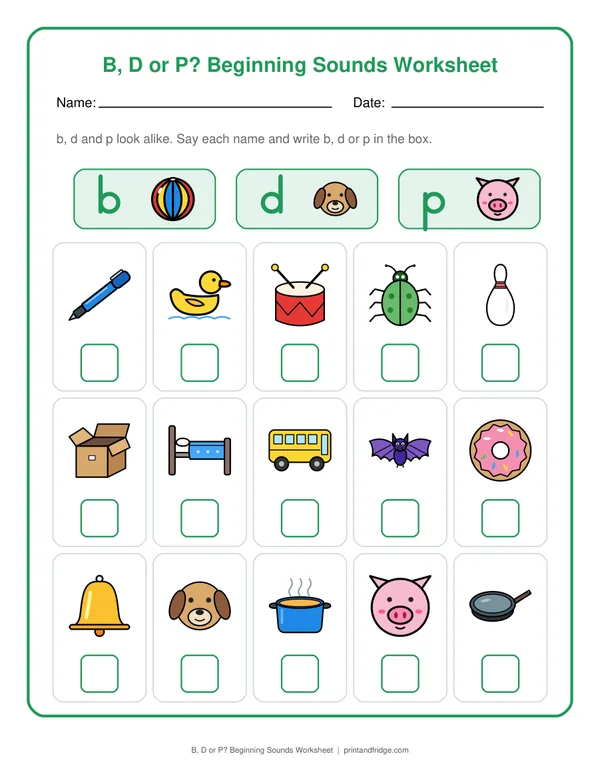
Fifteen pictures that start with b, d or p (bat, dog, pig, bed, duck, pen, drum, donut and more). These letters are easy to mix up, so kids say each word, listen to the first sound and write the right letter. It suits kindergarten, about ages 5 to 6, with large print and short, decodable words.
-
9. Beginning Blends: Circle the Blend
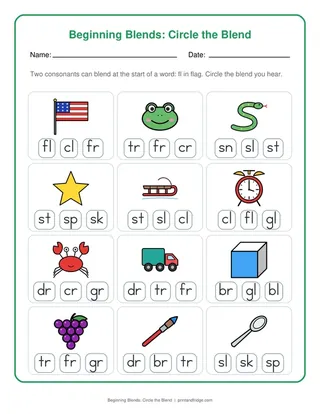
Twelve pictures that start with a consonant blend: flag, frog, snake, star, sled, clock, crab, truck, block, grapes, brush and spoon. Kids say the word and circle its blend from three look-alike choices. First graders can read it on their own and ask for help only with the trickier words.
-
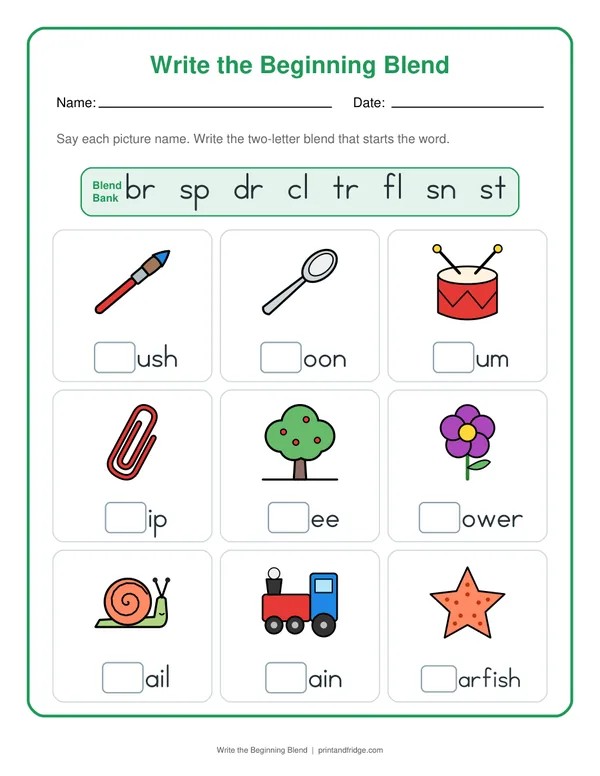
10. Write the Beginning Blend
Nine pictures that start with a blend (brush, spoon, drum, clip, tree, flower, snail, train and starfish). The rest of each word is printed; kids write the missing blend from the box at the top. First graders can read it on their own and ask for help only with the trickier words.
Tips for parents and teachers
- Say the first sound slowly and a little longer: sss-un.
- Avoid adding 'uh' to sounds: say /b/, not 'buh', so blending is easier later.
- Start with sounds that are easy to stretch, like m, s and f.
Did you know?
- Hearing the first sound in a word is part of phonemic awareness, which children can practice with their eyes closed.
- The letters c and k often spell the same /k/ sound, as in cat and kite.
- Few English words start with x, and in words like xylophone the x sounds like z.
Fun ways to use your printables
- Play I spy with sounds: I spy something that starts with /m/.
- Pack a sound bag with three toys that start the same and one that does not.
- Go on a walk and collect things that start with the letter of the day.
How to print
Click Download PDF and print at 100% on US Letter or A4 paper. Page 1 is the worksheet and page 2 is the answer key, so choose “page 1” in the print dialog if you only want the practice page. Every worksheet is free for home, homeschool and classroom use, so print as many copies as you need.
Frequently asked questions
When should children learn beginning sounds?
Most children start hearing first sounds around age 4. It begins as a listening game (what sound does sun start with?) and moves to matching the sound with a letter.
Why do the b, d and p pictures get their own page?
These letters are mirror images or flips of each other, so many children confuse them for a while. Hearing the sound first and then choosing the letter helps sort them out.
What are beginning blends?
Two consonants whose sounds are both heard at the start of a word, like bl in block or tr in tree. They are different from digraphs, where two letters make one new sound, like sh.
How do I use the A to Z chart?
Hang it near the desk. Point to a letter, say its sound and the picture name together (b, /b/, bus), and let your child find letters from their name.