Rhyming Words Worksheets
Updated November 2026 · 7 free printables
Seven rhyming worksheets that grow with your child: match the rhyming pictures (pre-K), color the picture that rhymes, decide whether two pictures rhyme, sort words into rhyme family houses, write a rhyming word, finish a little rhyme and find the word that does not rhyme (grade 2).
The first pages need no reading at all, just listening to picture names. Later pages add written words, short original poems and look-alike words that do not rhyme, like song next to ring, sing and king.
All 7 Rhyming Words Worksheets, One by One
Here is a closer look at every page in this collection: what it practices, which grade it fits and a tip for each one.
-
1. Match the Rhyming Pictures
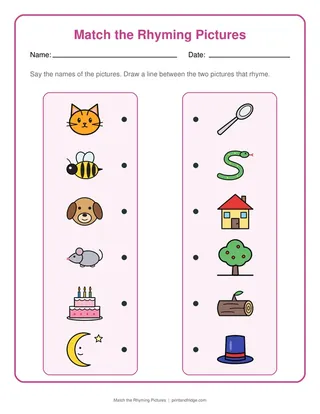
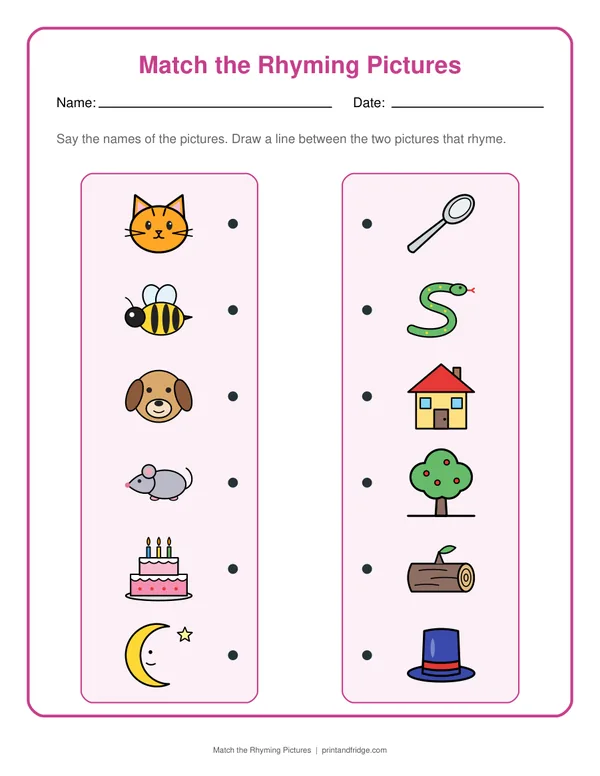
Six pairs of rhyming pictures to match with a line: cat and hat, bee and tree, dog and log, mouse and house, cake and snake, moon and spoon. A first rhyming worksheet for preschoolers who cannot read yet. It is made for pre-K, roughly ages 4 to 5: big letters, a picture clue and lots of coloring.
-
2. Color the Picture That Rhymes
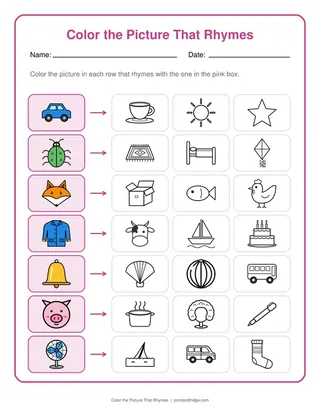
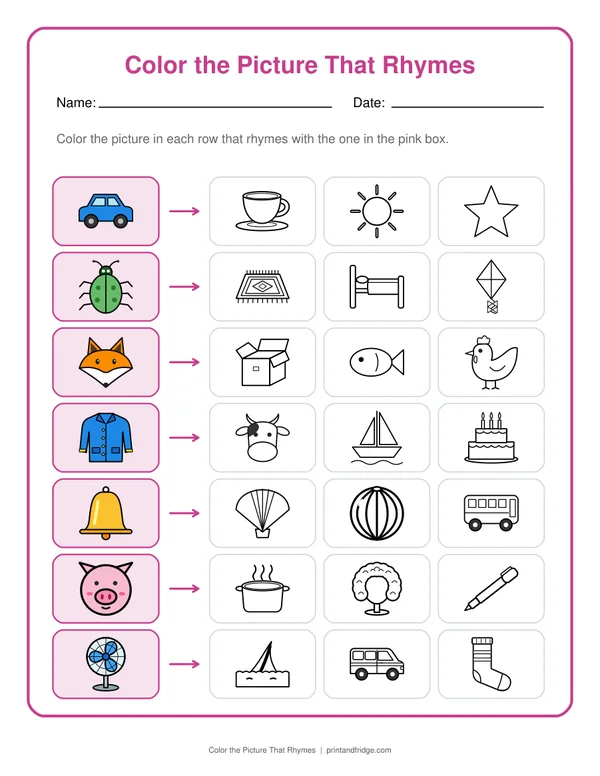
Seven rows: a colored picture on the left and three pictures to choose from. Kids color the one that rhymes: car and star, bug and rug, fox and box, coat and boat, bell and shell, pig and wig, fan and van. Kindergartners can point under each word with a finger as they read it out loud.
-
3. Do They Rhyme? Yes or No
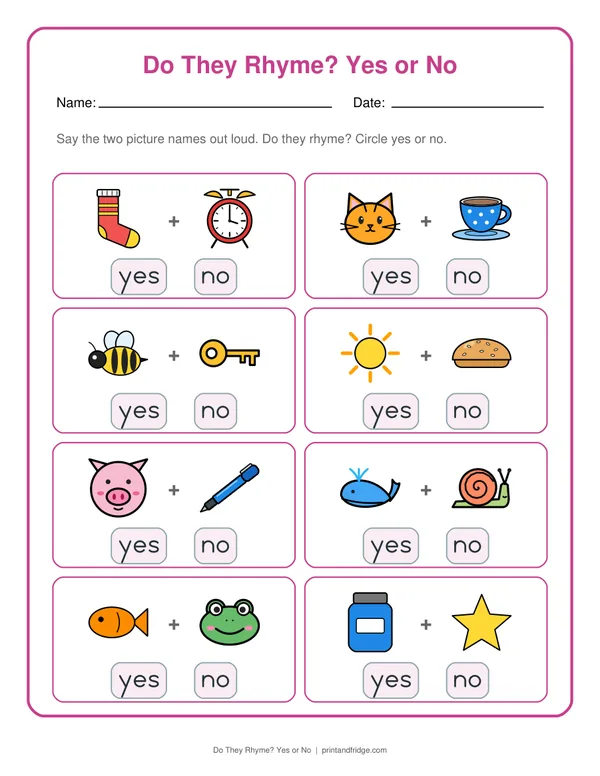
Eight picture pairs to say out loud and judge: do sock and clock rhyme? What about cat and cup? Kids circle yes or no for each pair. Five pairs rhyme and three do not. It suits kindergarten, about ages 5 to 6, with large print and short, decodable words.
-
4. Rhyming Word Families Sort
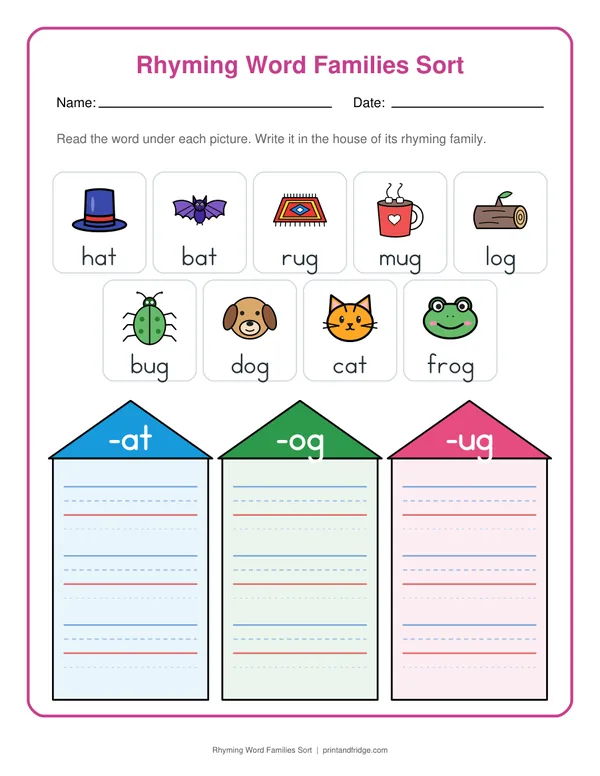
Nine labeled pictures from three rhyming word families (-at, -og and -ug). Kids read cat, dog, bug and the other words, notice the matching endings and write each word in the right family house. Kindergartners can point under each word with a finger as they read it out loud.
-
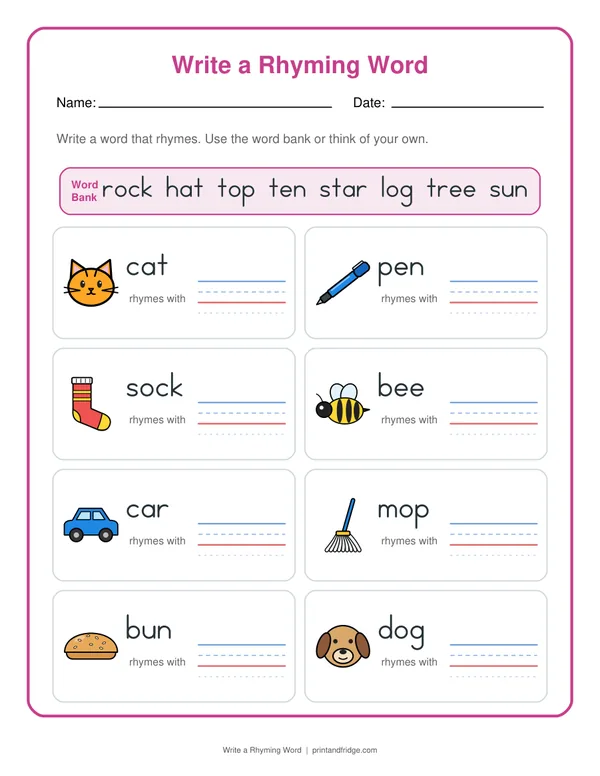
5. Write a Rhyming Word
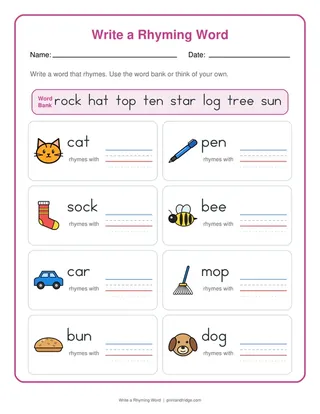
Eight words with pictures (cat, pen, sock, bee, car, mop, bun and dog). Kids write a rhyming word for each one, using the word bank or their own ideas. The key shows the word bank answer; any real rhyme is correct. First graders can read it on their own and ask for help only with the trickier words.
-
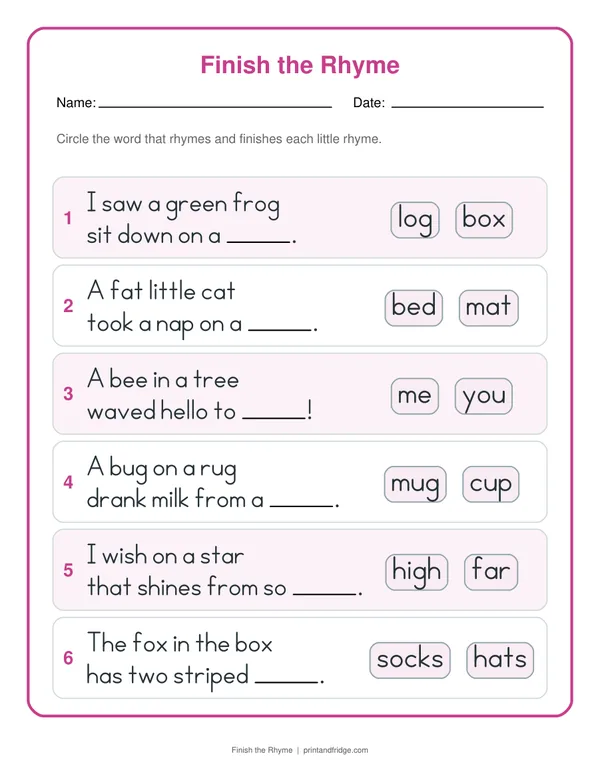
6. Finish the Rhyme
Six original two-line rhymes with the last word missing, like "A bug on a rug / drank milk from a ___." Kids choose between two words that both make sense and circle the one that rhymes. First graders can read it on their own and ask for help only with the trickier words.
-
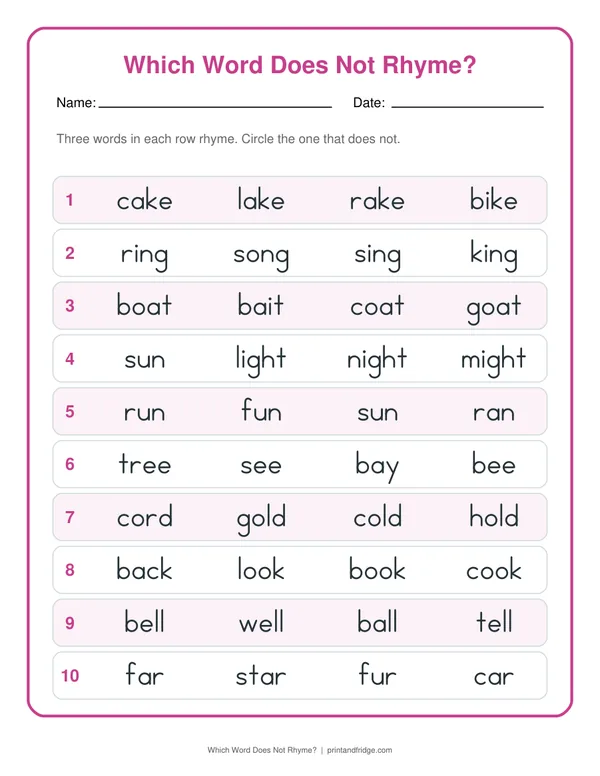
7. Which Word Does Not Rhyme?
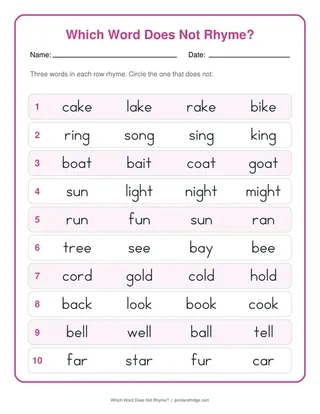
Ten rows of four words where three rhyme and one does not: cake, lake, rake and bike; ring, sing, king and song and more. The odd words often look alike (song, ran, bay, fur), so kids have to listen to the ending sound. It fits second grade readers, around ages 7 to 8.
Tips for parents and teachers
- Name each picture together first so your child uses the same words as the page.
- On the yes or no page, say the pair twice: once normally, once stretching the ending.
- Read the finished rhymes on the Finish the Rhyme page with a bouncy rhythm.
Did you know?
- The rhyme family sort uses the -at, -og and -ug families, three of the most common short vowel rimes.
- The odd word on each row of the grade 2 page often looks like the others, such as song next to sing and king.
- Children can usually hear rhymes before they can produce their own.
Fun ways to use your printables
- Write a class or family rhyming book: one rhyming pair and a drawing per page.
- Turn the matching page into a memory game by cutting out the pictures.
- Make up a two-line rhyme about your pet or favorite toy.
How to print
Click Download PDF and print at 100% on US Letter or A4 paper. Page 1 is the worksheet and page 2 is the answer key, so choose “page 1” in the print dialog if you only want the practice page. Every worksheet is free for home, homeschool and classroom use, so print as many copies as you need.
Frequently asked questions
Which rhyming worksheet is the easiest?
Match the Rhyming Pictures: six pairs of pictures, no reading needed. Color the Picture That Rhymes is the next step.
My child guesses words that start the same instead of rhyming. What helps?
Stress the ending when you say the words (c-AT, h-AT) and ask 'do they sound the same at the end?' The yes-or-no page practices exactly this.
Is it okay if my child writes a different rhyme than the answer key?
Yes. On Write a Rhyming Word any real word that rhymes is correct; the key just shows the word from the word bank.
Are the little rhymes on the Finish the Rhyme page from famous books?
No, they are short original rhymes written for this page, so you can print and share them freely.