Visual Perception Worksheets for Kids
- Free PDFs, no signup
- 45 printables
- US Letter and A4
- Complete pack: all 45 pages in one PDF
- Updated November 2026
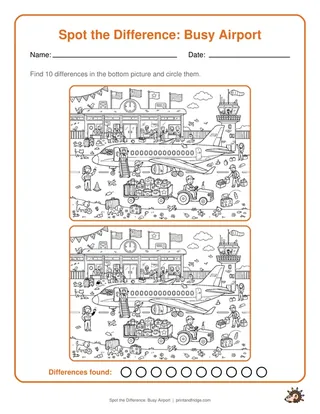
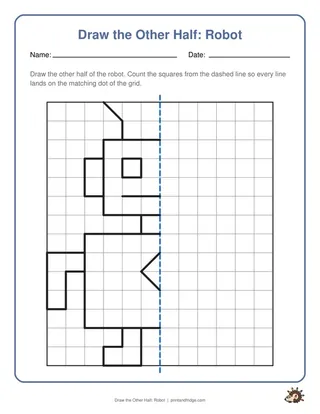
Visual perception worksheets train how a child makes sense of what the eyes see: telling two pictures apart, finding a shape hidden in a busy scene, scanning a page in order, seeing what is missing, completing a symmetric half and copying a drawing square by square.
By signing up you agree to our privacy policy and to occasional emails with new printables. Unsubscribe any time.
Thank you! Your PDF is downloading. If it did not start, tap here to download it.


All 45 worksheets in one PDF
No need to download them one by one. Type your email and the whole pack downloads right away.
By signing up you agree to our privacy policy and to occasional emails with new printables. Unsubscribe any time.
Thank you! Your PDF is downloading. If it did not start, tap here to download it.


Liked these? Take all 45 worksheets in one PDF
One file, ready to print. Type your email and it downloads right away.
By signing up you agree to our privacy policy and to occasional emails with new printables. Unsubscribe any time.
Thank you! Your PDF is downloading. If it did not start, tap here to download it.
About these printables
These are the skills behind reading a line of text, copying from the board and finding things on a page.
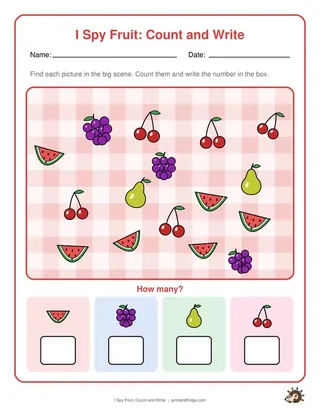
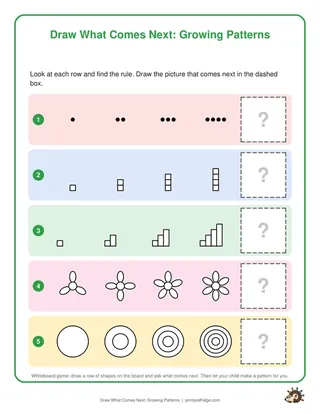
The pages are grouped by skill in the sheet list below: spot the difference and same-and-different for visual discrimination, hidden pictures and I spy for figure-ground and scanning, picture pieces for visual closure, symmetry and arrow drawing for spatial relations, mazes for visual planning. Most kinds come in several levels, so the same skill can be practiced from age 4 to 10.
At a glance
- Pages
- 45 free printables, one PDF each
- Ages
- 3 to 11
- Levels
- Easy, Pre-K, Medium, Hard, Kindergarten, Grade 1
- Answer keys
- 41 of the 45 pages have one on page 2
- Paper
- US Letter and A4
- Play online
- 28 of them also work as a free browser game
- Complete pack
- all 45 pages in one PDF (box at the top of this page)
- Price
- free; every single page downloads with no sign-up
Tips for using visual perception worksheets
- Tell the child how many items to find; a known goal keeps them scanning instead of guessing.
- Teach a scanning pattern: left to right, top to bottom, like reading.
- Cover half of a busy page with paper to make it easier, then uncover it.
- Work on one skill for a week (for example figure-ground) and step from easy to hard.
Did you know?
- Visual discrimination, figure-ground, visual closure, spatial relations and visual memory are the visual perception skills most often tested by therapists.
- Good eyesight and good visual perception are different: a child can have 20/20 vision and still struggle to find an object in a busy picture.
- Copying letters from the board uses several visual perception skills at once, plus visual memory.
Fun ways to use your printables
- After a spot the difference, ask the child to draw one more difference for you to find.
- Play I spy on a walk with the same words as the I spy page.
- Time a hidden pictures page each week and compare, beating your own time rather than a sibling's.
How to print
Click Download PDF and print at 100% on US Letter or A4 paper. 41 of the 45 pages come with an answer key (page 2 of their PDF; the page of each one says so), so choose “page 1” in the print dialog if you only want the practice page. Every page is free for home, homeschool and classroom use, so print as many copies as you need.
Frequently asked questions
What is visual perception?
The brain's work of understanding what the eyes take in: recognizing shapes, noticing differences, seeing an object against a busy background, judging position and direction, and remembering what was seen. It is different from eyesight; a child can see clearly and still find these tasks hard.
Which visual perception skills do these worksheets cover?
Visual discrimination (spot the difference, same and different), figure-ground (hidden pictures, I spy), visual closure (picture pieces, what's missing), spatial relations (symmetry, arrow drawing), visual memory (what's missing) and visual-motor planning (mazes).
Are these useful for occupational therapy?
They are often used that way: free to print for therapy sessions and home programs. Pick the skill you are working on and step up from easy to hard.
My child struggles with these. Should I worry?
Start with the easy level and do them together, pointing to one part of the picture at a time. If a child has ongoing trouble with copying, reading or finding things, talk to the teacher or pediatrician; an eye exam is a good first step.